Logistics facility floors
Distribution Center Concrete Floors
Distribution center floors are measured, not just poured. Flatness and levelness numbers, joint performance and surface durability decide whether forklifts, turret trucks and automated equipment run cleanly for the next twenty years.
- FF/FL specified random-traffic floors
- Defined-traffic layouts for narrow aisle
- Joint layout coordinated to rack grid
- Burnished and hardened surface finishes
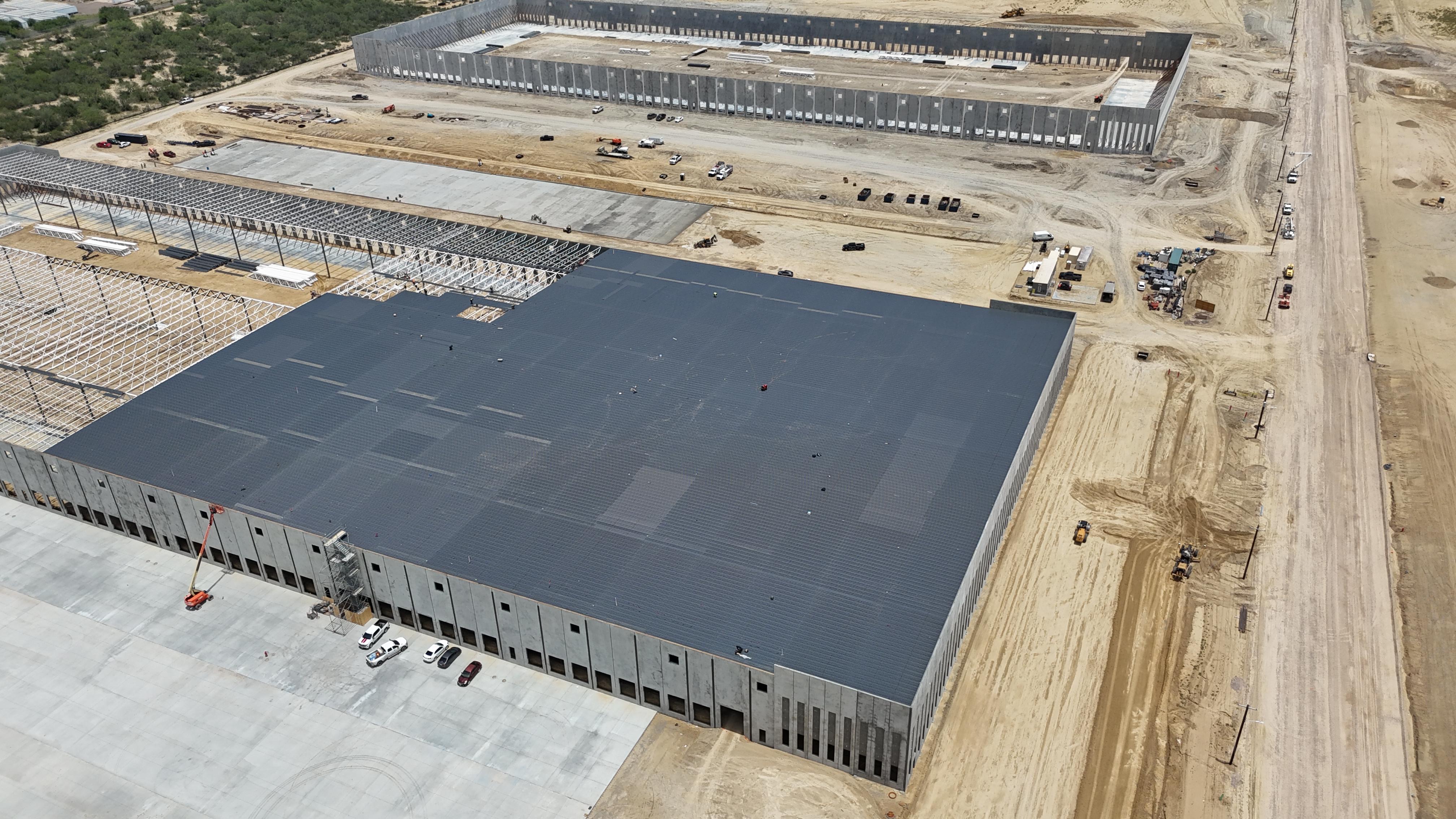
Floor Flatness & Levelness
We build to the FF/FL values in the specification and coordinate the profilograph survey window so results are measured within the required time frame after placement.
Achieving the numbers is a function of placement method, screed type, finishing sequence and crew discipline — all of which are planned before the pour, not corrected afterward.
Joint Strategy
- Dowel baskets or plate dowels for load transfer
- Armored joints in high-traffic aisles where specified
- Saw-cut timing controlled to prevent random cracking
- Semi-rigid joint filler after shrinkage
Slab Curling & Moisture
Curling at joints is the most common complaint on large logistics floors. Mix selection, vapor barrier placement, curing method and joint spacing are chosen together to control shrinkage differential.
Where moisture-sensitive flooring or coatings follow, we coordinate vapor retarder details and moisture testing with the specification.
Placement Sequencing
Interior floors are placed in strips or large panel pours sized around supply rate, finishing capacity and the column grid, and sequenced with dock equipment, racking installation and building enclosure.
Dock & Apron Interface
The transition between the interior floor, the dock levelers and the exterior apron takes the hardest wheel loads on the site. Thickened edges, dowelling and joint detailing at that interface are part of the scope.
Scale We Handle
Floors from 50,000 to 500,000+ square feet, placed with multiple laser screeds and finishing crews to maintain production without sacrificing surface quality.
Questions
Frequently Asked
What FF/FL numbers can you achieve?+
We build to the values specified in the contract documents. Higher specified numbers require specific equipment, placement strips and crew size, which are reflected in the bid.
Do you provide the flatness survey?+
Testing is typically performed by the owner's independent lab. We coordinate the survey timing and address any deficient areas per the specification.
Can you pour a floor in an existing building?+
Yes. Interior replacement and expansion floors are placed with pumping or conveyor access planned around the existing structure.
Send plans. Get a real commercial bid.
Upload blueprints, structural drawings and spec sections. Our estimating team reviews the documents before pricing your scope.